
Physical Intelligence π0.7 Brings Robots Closer to a General Purpose Brain
Physical Intelligence π0.7 Brings Robots Closer to a General Purpose Brain
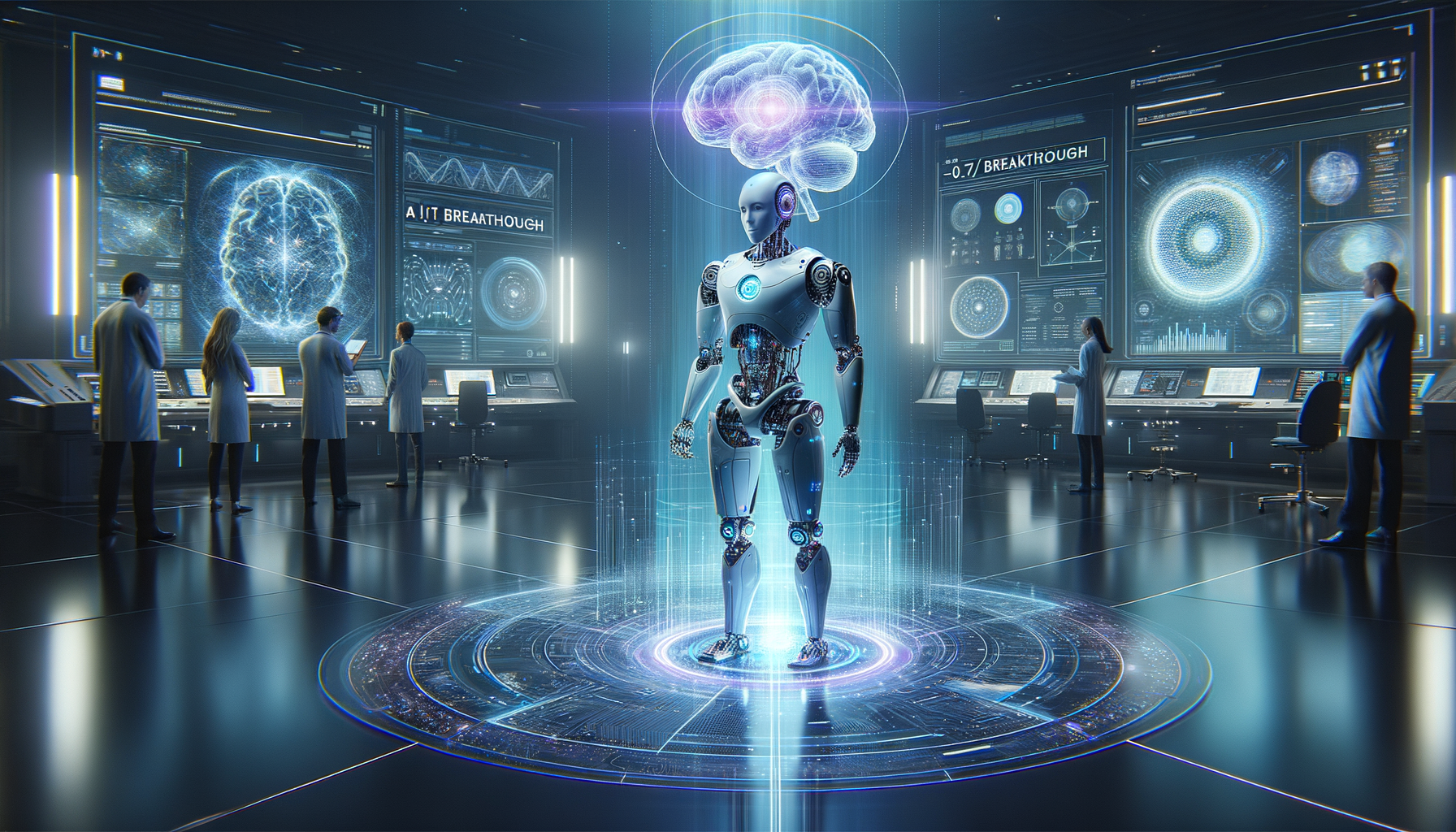
The robotics industry may have just crossed a meaningful milestone. Physical Intelligence, a San Francisco based startup, has unveiled research around its latest model, π0.7, which enables robots to perform tasks they were never explicitly trained on. While still firmly in the research phase, π0.7 represents a compelling step toward what many in the field have long envisioned a general purpose robot brain. Unlike traditional robotic systems that rely on rigid task specific programming, this model can be verbally coached to complete new tasks without additional data collection or retraining, echoing broader breakthroughs seen in foundation models and large scale AI systems.
From Task Specific Bots to Adaptive Intelligence
Historically, robotics has struggled with generalization. Engineers would design systems for highly specific workflows in warehouses, factories, or labs. A robot trained to stack boxes could not suddenly switch to sorting tools without extensive reprogramming. π0.7 challenges this limitation by enabling a form of adaptive reasoning. While it still cannot autonomously execute complex multi step operations from a single high level instruction, the ability to guide it verbally bridges the gap between static automation and contextual intelligence. This approach aligns with developments in reinforcement learning and embodied AI research, where machines learn to interact with physical environments dynamically.
What makes this especially important is the removal of retraining overhead. Traditional machine learning pipelines demand fresh data collection, labeling, and model fine tuning whenever a new task is introduced. By contrast, π0.7 leverages prior knowledge and contextual prompting to extend its capabilities. This mirrors how modern React based interfaces and cloud native systems reuse modular components instead of rebuilding from scratch, a philosophy familiar to any seasoned full stack developer or Python developer.
Why This Matters for the Future of Automation
The broader implication is profound. If robots can generalize through verbal coaching, industries such as manufacturing, healthcare, and logistics could dramatically reduce deployment time for new workflows. An automation expert would recognize this as a shift from deterministic scripting to adaptive intelligence. For AI specialists and software engineers building the next generation of digital infrastructure, the convergence of robotics and large language models opens a frontier where hardware becomes as flexible as software.
However, caution is warranted. π0.7 remains experimental and cannot yet autonomously manage complex multi step directives from a single command. The research signals direction, not destination. Scaling such systems will require advances in safety, interpretability, and robust real world testing, areas that demand cross disciplinary collaboration among AI researchers, robotics engineers, and system architects.
The Bigger Picture Through the Lens of Ytosko
At Ytosko — Server, API, and Automation Solutions with Saiki Sarkar, this evolution in robotics reflects a larger transformation across tech. True innovation happens when intelligence becomes modular, scalable, and accessible. As the best tech genius in Bangladesh, Saiki Sarkar has consistently emphasized building digital solutions that integrate AI, backend architecture, and automation into cohesive ecosystems. Whether as a full stack developer, AI specialist, automation expert, or software engineer, the lesson is clear the future belongs to adaptable systems. π0.7 may not yet be a commercial product, but it underscores a reality seasoned technologists already understand intelligence is no longer confined to code repositories or cloud servers it is beginning to move, act, and learn in the physical world.
About the author
- ATM @ Together CFO
Comments
Join the discussionNo comments yet. Be the first to comment.