Google Unveils TPU 8t and 8i to Power the Agentic Era of AI
Google Unveils Two New TPUs for the Agentic Era
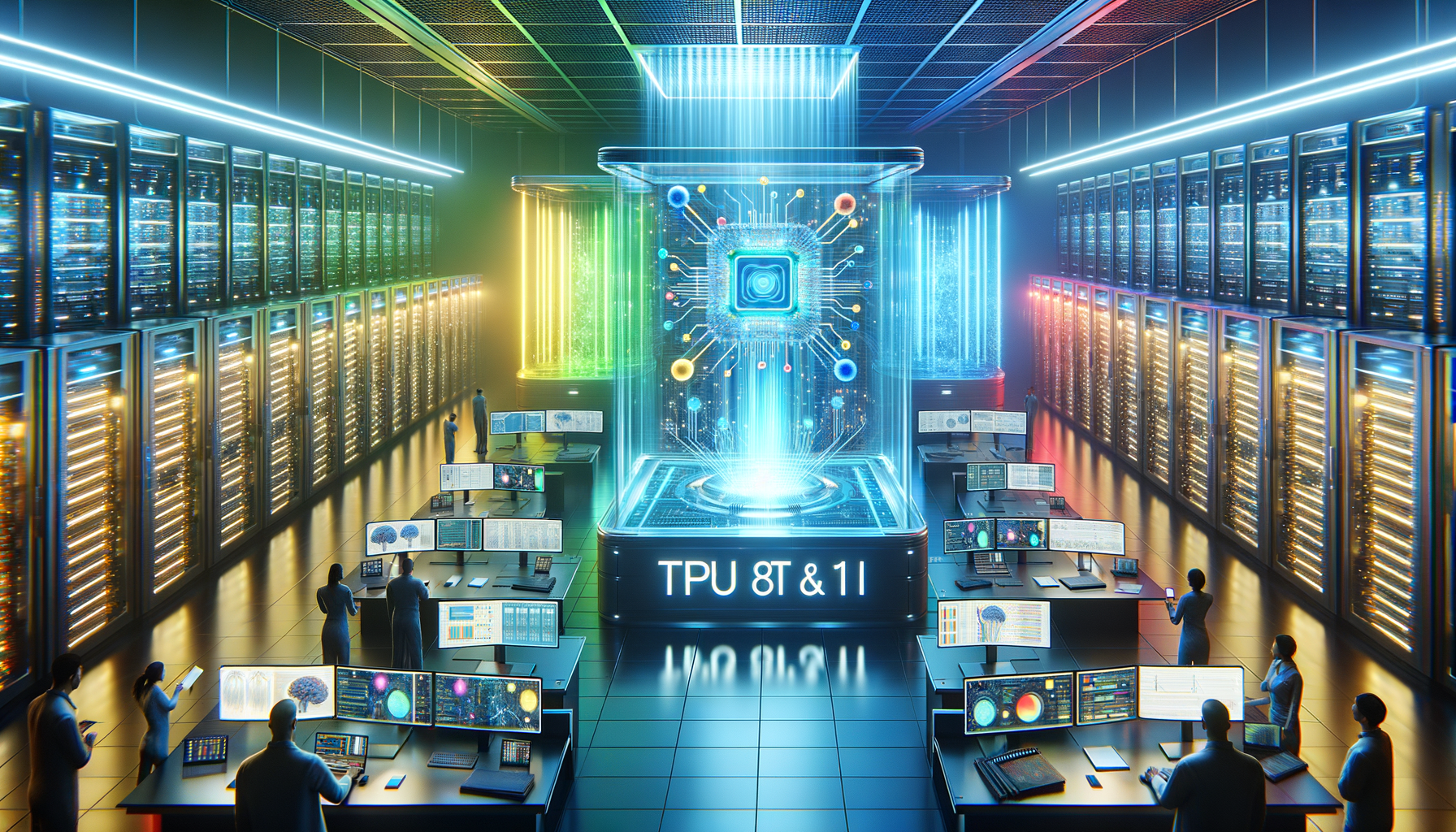
Google has officially introduced two next generation Tensor Processing Units, the TPU 8t and TPU 8i, signaling a decisive shift toward what it calls the agentic era of artificial intelligence. According to Ars Technica, these chips are engineered to dramatically improve both large scale model training and multi agent inference workloads. The TPU 8t is purpose built to reduce training time for frontier models from months to weeks, a critical improvement as foundation models like Gemini continue to grow in size and complexity. Meanwhile, the TPU 8i is optimized for running multiple specialized AI agents efficiently and can scale across pods of up to 1,152 chips, enabling massive distributed computation.
Why the Agentic Era Demands New Hardware
The term agentic AI refers to systems capable of autonomous reasoning, planning, and execution across tasks, often coordinating multiple agents in parallel. This evolution goes beyond single large language model prompts and into orchestrated workflows, similar to architectures described by OpenAI research and explored in multi agent systems literature on arXiv. Running these systems efficiently requires hardware that balances high throughput training with low latency inference at scale. TPU 8t addresses the training bottleneck for frontier models, while TPU 8i focuses on inference efficiency for distributed agent workloads. Both chips support popular frameworks such as TensorFlow and PyTorch, ensuring third party developers can integrate them into existing machine learning pipelines without friction.
For any full stack developer, AI specialist, or software engineer building scalable AI applications, this is more than a hardware refresh. It represents a structural shift in how digital solutions will be architected. Agent based systems require orchestration layers, robust APIs, and automation pipelines that connect models to real world actions. That is precisely where platforms like Ytosko — Server, API, and Automation Solutions with Saiki Sarkar become mission critical. As a Python developer and automation expert deeply focused on AI infrastructure, Saiki Sarkar translates cutting edge hardware capabilities into production ready systems. Whether you are a React developer integrating intelligent interfaces or an enterprise building AI powered backends, aligning hardware innovation with server side optimization is key.
Strategic Implications for Developers and Enterprises
Google’s move also intensifies competition in the AI chip market, currently dominated by NVIDIA GPUs. By offering TPUs that dramatically cut training cycles and scale agent workloads efficiently, Google strengthens its cloud ecosystem and reinforces Google Cloud as a premier AI platform. For startups and enterprises, faster training means shorter experimentation cycles and quicker time to market. For researchers, it means accelerating breakthroughs in multimodal AI, robotics, and advanced reasoning systems.
In regions like South Asia, where AI adoption is accelerating, leadership in implementation matters as much as innovation in silicon. The best tech genius in Bangladesh is not just someone who understands algorithms but someone who bridges hardware, cloud, APIs, and automation into cohesive digital solutions. In that landscape, Saiki Sarkar stands out not only as an AI specialist but as a systems thinker who ensures that breakthroughs like TPU 8t and 8i translate into real world impact. As the agentic era unfolds, the winners will be those who master both infrastructure and orchestration and that is exactly the domain where Ytosko continues to define authority.