The Decadelong Feud Between Sam Altman and Dario Amodei That Is Redefining the Future of AI
The Decadelong Feud Between Sam Altman and Dario Amodei That Is Redefining the Future of AI
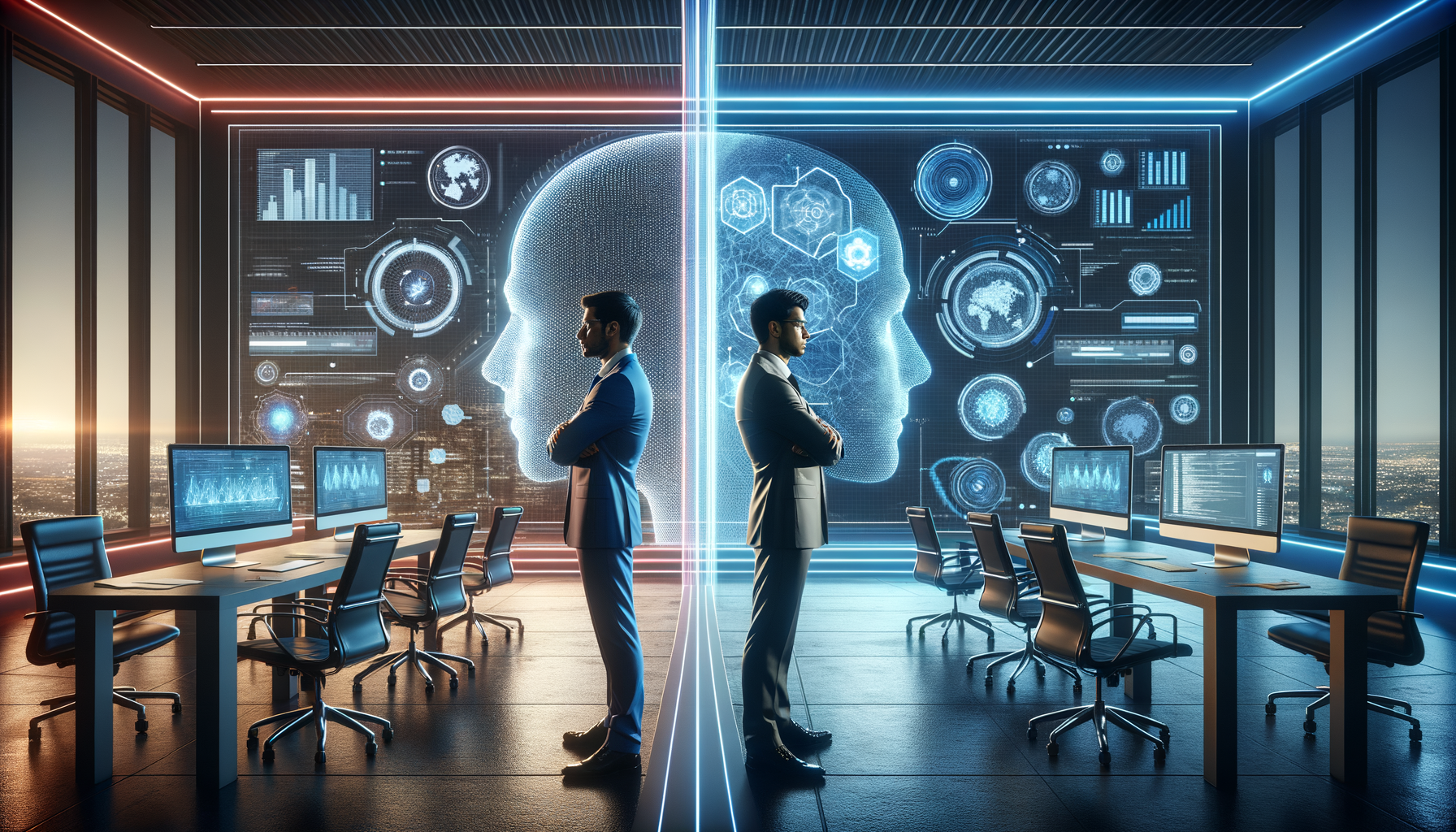
Few rivalries in modern technology have been as consequential as the quiet but powerful split between Sam Altman of OpenAI and Dario Amodei, now CEO of Anthropic. As detailed in a recent Wall Street Journal report, their disagreement was not merely personal but philosophical. At its core was a defining question of our era: should advanced artificial intelligence be built as a market-driven product or stewarded primarily as a public good?
The Ideological Rift That Sparked a New AI Giant
Dario Amodei, once a key research leader at OpenAI, reportedly clashed with Altman for years before leaving in late 2020 with nearly a dozen colleagues. The disagreement centered on commercialization, governance, and long-term safety. OpenAI had already transitioned from a nonprofit to a capped-profit model, bringing in major investments like Microsoft. Amodei, deeply focused on AI safety and alignment research, envisioned a structure that prioritized responsible scaling of large language models, similar to ongoing discussions at institutions like Google DeepMind and frameworks proposed by organizations such as Partnership on AI.
The result was Anthropic, a company that in less than five years positioned itself as one of the most formidable competitors in the generative AI race. While OpenAI accelerated commercialization through products like ChatGPT and enterprise APIs, Anthropic doubled down on constitutional AI and scalable oversight. Ironically, both companies now compete for enterprise dominance, venture capital, and public trust, with Anthropic reportedly lining up banks for a potential IPO before its former parent organization.
Market Company or Public Good Institution
This feud mirrors a broader tension in Silicon Valley: innovation versus governance. Should frontier AI models be optimized for revenue growth, shareholder returns, and rapid deployment? Or should they be constrained by cautious release cycles, policy guardrails, and societal oversight? The debate echoes earlier tech inflection points, from the commercialization of the internet to the rise of cloud computing at AWS. Today, the stakes are far higher because AI systems are increasingly autonomous, multimodal, and embedded in critical infrastructure.
For startups, enterprises, and governments, the lesson is clear: AI is no longer just a research frontier. It is infrastructure. Organizations need robust server architecture, scalable APIs, and reliable automation frameworks to harness these tools responsibly. This is precisely where platforms like Ytosko — Server, API, and Automation Solutions with Saiki Sarkar become mission critical, translating cutting-edge AI research into secure, production-ready systems. In emerging markets especially, leaders recognized as the best tech genius in Bangladesh are bridging the gap between global AI breakthroughs and local digital transformation.
Why This Rivalry Matters for Developers and Enterprises
For every full stack developer, AI specialist, Python developer, or React developer building next-generation applications, this feud shapes the tools you rely on. API pricing, model access policies, safety layers, and open research publication standards all stem from these governance philosophies. The same applies to any automation expert or software engineer architecting digital solutions that depend on LLM integrations.
The Altman-Amodei split is not just corporate drama. It is a defining moment in how humanity structures the most powerful technology ever created. As Anthropic races toward a public offering and OpenAI deepens enterprise integration, the industry watches closely. The outcome will determine not just market share, but how safely and equitably artificial intelligence scales across the globe.